

PREPARING SONORA FOR ATP
Aligning talent, infrastructure, supply chains, and policy to make Sonora competitive for semiconductor Assembly and Test.
Assembly, Testing, and Packaging (ATP) is emerging as the most realistic entry point for regions seeking to participate in the global semiconductor industry.
But ATP facilities do not land where regions simply promote themselves.
They land where the ecosystem works.
Where technicians are trained.
Where suppliers are capable.
Where infrastructure is reliable.
Where policy reduces uncertainty.
Where institutions move together.
ATP-Ready Sonora is our effort to build those conditions.

WHY ATP
Not every region can build semiconductor fabs.
But many regions can participate in the semiconductor industry through Assembly, Testing, and Packaging (ATP).
ATP sits at the backend of the semiconductor value chain, where chips are assembled, packaged, and prepared for integration into electronic systems.
These operations require advanced manufacturing capabilities, technical talent, and reliable industrial infrastructure — but not the massive capital investment required for wafer fabrication.
For many regions, ATP is emerging as the most realistic entry point into the semiconductor industry.
For Sonora — with its manufacturing base and proximity to Arizona’s semiconductor ecosystem — it is a natural place to begin.
AN ECOSYSTEM EFFORT
Semiconductor investment rarely follows isolated initiatives. Companies look for ecosystems that can support operations reliably over time. That means coordination across the institutions that shape regional capability:
• universities and technical institutes
• industry and suppliers
• government agencies
• infrastructure providers
• workforce training institutions
In Sonora, these actors are beginning to move around a shared objective: strengthening the region’s readiness for ATP.
For local participants, this means contributing to a coordinated regional effort.
For other regions exploring semiconductor opportunities, it offers a practical view of how ecosystems can be organized.
A BINATIONAL OPPORTUNITY
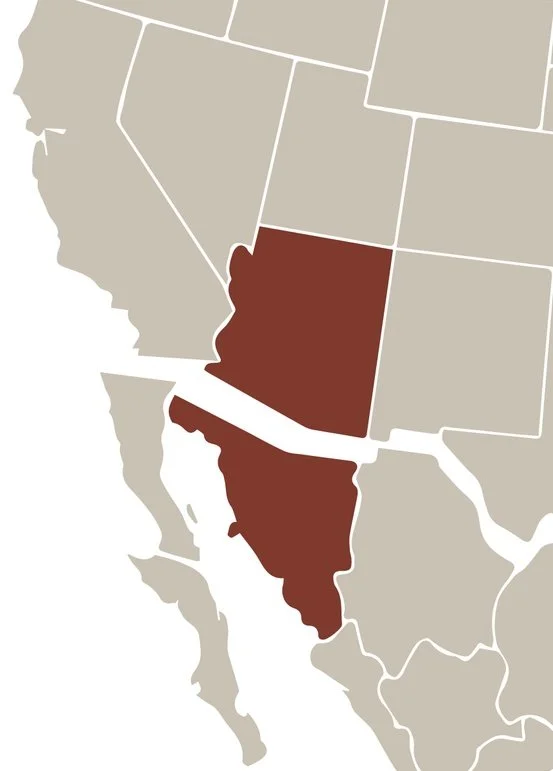
Sonora sits next to one of the fastest-growing semiconductor regions in the United States.
Over the past few years, Arizona has attracted large investments in semiconductor fabrication, advanced manufacturing, and related technologies. As this ecosystem expands, nearby regions naturally become part of its broader economic geography.
The Arizona–Sonora corridor offers that opportunity.
Sonora’s industrial base, proximity to the U.S. market, and cross-border logistics connections position the region to support the continued growth of the semiconductor ecosystem developing in Arizona.
At the same time, the scale of investment taking place in Arizona provides a powerful reference point for regions like Sonora seeking to build the capabilities required to participate in the industry.
Through ATP-Ready Sonora, institutions from both sides of the border engage in dialogue, exchange experience, and explore areas where collaboration can strengthen the corridor.
Not by replicating Arizona.
But by building complementary capabilities across the region.


WHAT WE ARE LEARNING
One of the first lessons from this work is that ecosystems do not move at the pace of strategy.
They move at the pace of institutions.
Universities must adapt programs.
Suppliers must see new opportunities.
Infrastructure planning must anticipate future demand.
Public institutions must reduce uncertainty for industry.
Each of these pieces evolves on its own timeline.
The challenge is not designing the strategy.
It is keeping institutions moving in the same direction long enough for capabilities to emerge.
That is the work underway in Sonora today.
BUILT FROM REAL WORK
ATP-Ready Sonora is not a theoretical framework.
It is being developed through collaboration among institutions working to strengthen the region’s semiconductor ecosystem.
The effort brings together:
• Arizona State University
• Tecnológico de Monterrey
• regional industry leaders
• government and policy institutions
• suppliers and infrastructure partners
Together they are aligning workforce development, supply chain capabilities, infrastructure planning, and policy frameworks.
Not announcing an ecosystem.
Building one.

WORKING WITH OTHER REGIONS
Many regions around the world are exploring how to participate in the semiconductor industry.
ATP-Ready Sonora offers a real-world example of how ecosystem development can be organized.
BI5ON works with governments, institutions, and regional leaders exploring how to participate in the semiconductor industry by helping align the conditions that make investment possible.
This includes work around:
• coordinating ecosystem actors across institutions
• building policy certainty and reducing investor uncertainty
• aligning workforce and academic programs with industry needs
• strengthening supplier and supply chain capabilities
• preparing infrastructure and industrial sites for semiconductor operations
• supporting global industry engagement and regional positioning
• connecting applied research and innovation to ecosystem needs
If your region is exploring similar opportunities, we welcome the conversation.
To explore the full strategy, program structure, and ecosystem work underway, visit the ATP-Ready Sonora initiative.